
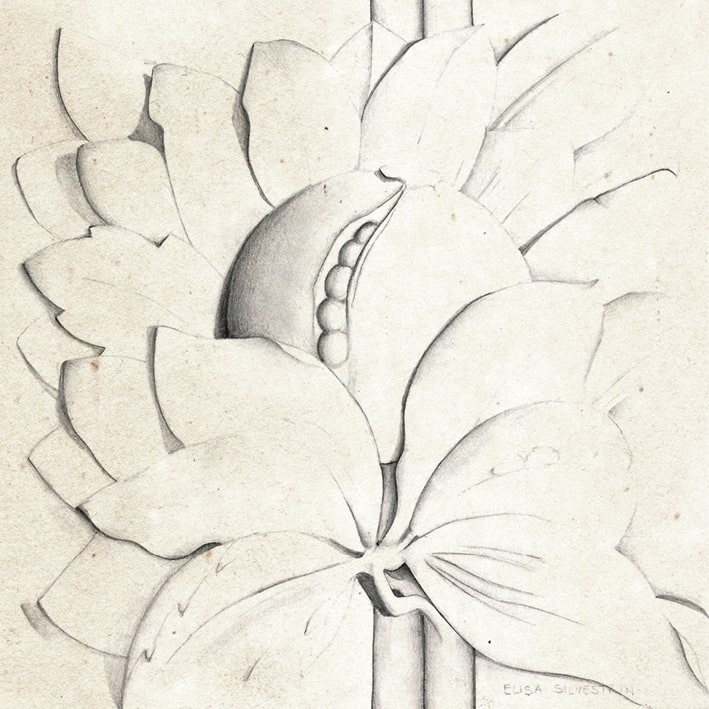
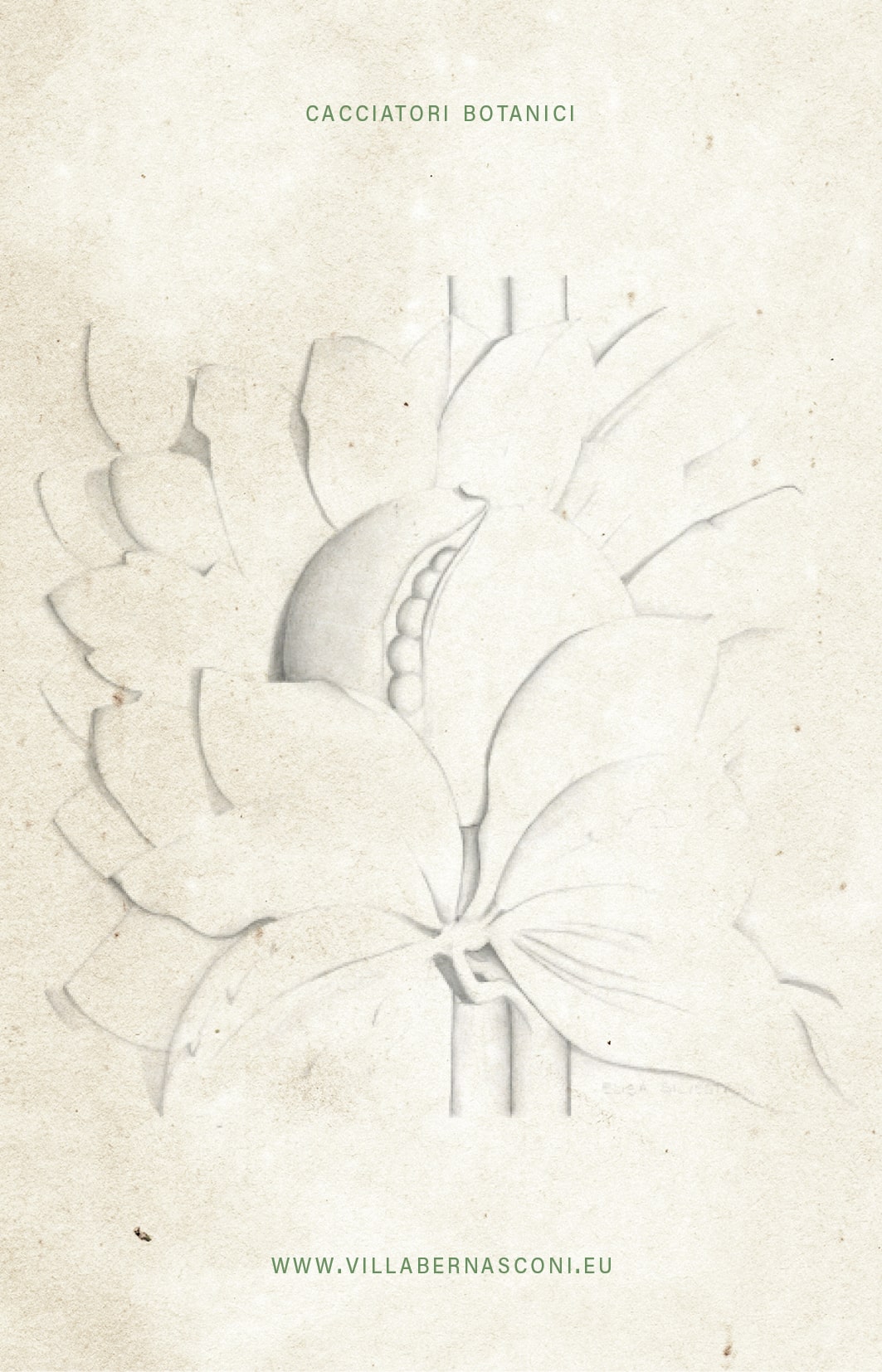
Find the corresponding decoration and take a photo of it
Pomegranate
Punica granatum
The pomegranate is a highly symbolic fruit, featured in many legends. Depicted in Renaissance decorations, textiles, and frescoes, it symbolized royalty due to its shape, which resembles a crowned head. The abundance of seeds inside the fruit has made it a symbol of fertility and prosperity. Potentially, a single pomegranate can give rise to many plants; in fact, the seeds of Punica granatum are dispersed through zoochory, meaning by animals. There are many ways in which a seed can be spread.
INSIGHT
Plants adopt truly remarkable strategies to disperse their seeds. The coconut, for example, is a seed naturally wrapped in a very light layer that allows it to float and travel across ocean waves. The water chestnut has a very light seed with a distinctive shape that floats on the water’s surface and is carried far away. This is called hydrochory, or dispersal by water.
Some seeds, instead, are carried by the wind, this is anemochory. Two seeds you have probably played with belong to this category: the samara, the typical seed of the maple, and the dandelion puff. The former, when thrown, becomes a spinning propeller that allows it to travel far. The dandelion may seem to rely on children blowing on it to spread its parachute-like seeds, but in reality, it also depends on the wind.
Another extraordinary method is to catapult seeds: the geranium can launch its seeds up to two or three meters away with just a light touch. The seeds of burdock and wild carrot, on the other hand, use special techniques: they have tiny hooks that cling to animal fur and are carried away. Plants adapt incredibly well to their surroundings, developing survival strategies such as floating, flying, launching, and clinging, and much more.