

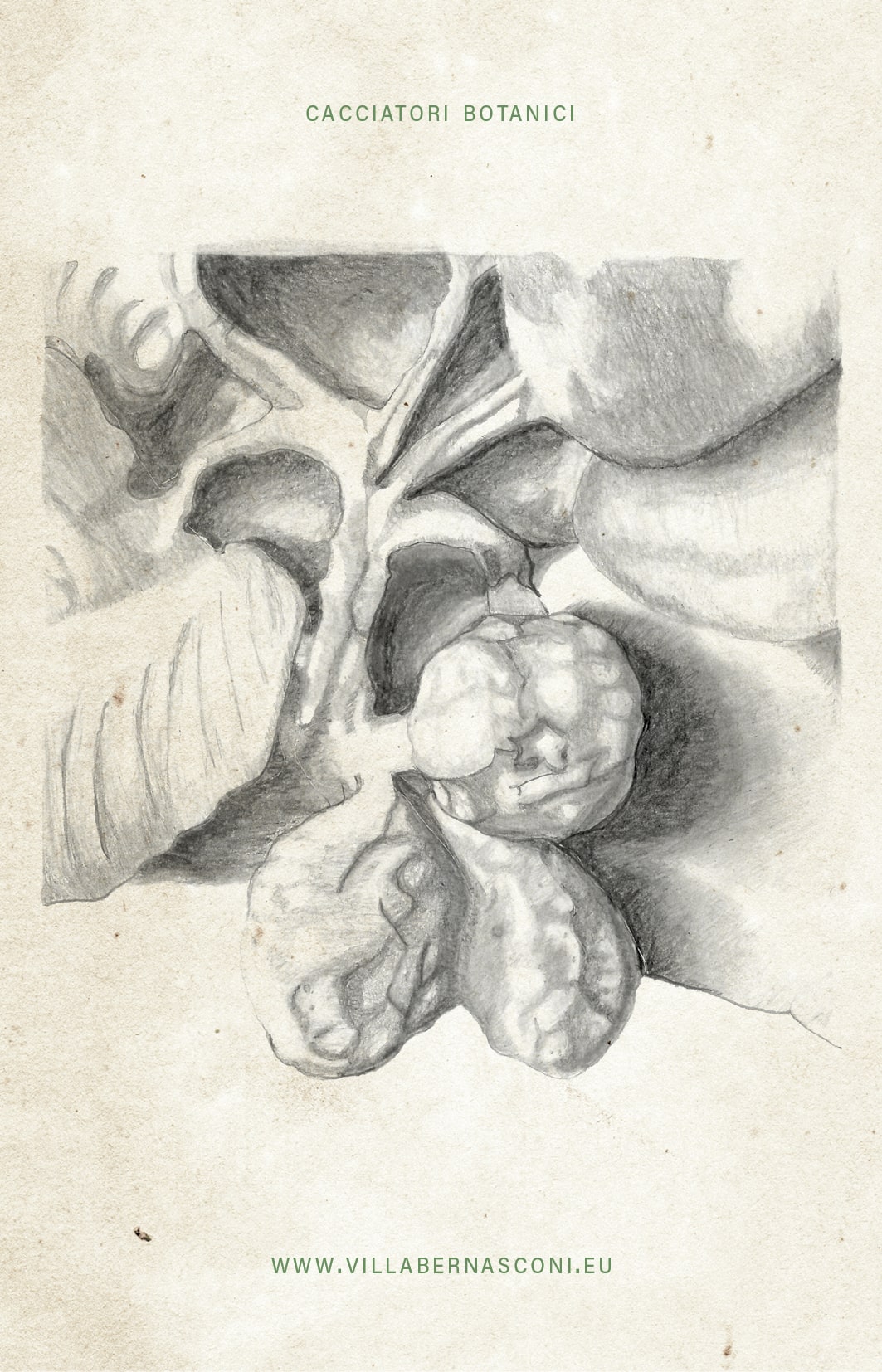
Find the corresponding decoration and take a photo of it
White Mulberry
Morus alba
“The wisest of trees”: this is how the botanical protagonist of Villa Bernasconi is described. It is considered wise because Morus alba is the last to bloom and the first to ripen its fruit, doing so only after the cold days have passed, thereby limiting the damaging effects of winter. Pliny claimed that this ripening process occurred entirely in a single night, even causing the tree to creak.
Its leaves, besides being valuable, are quite distinctive and unusual, as they display different shapes on the same branch. However, they generally have what is called a cordate shape, that is, like an inverted heart with a rather pointed tip.
INSIGHT
Morus alba originates from China, and it is here, according to legend, that Emperor Xi Ling Shi noticed silkworms feeding on its leaves, then spinning their cocoons and emerging as butterflies. This observation led to the idea of breeding them, giving rise to a highly important market: silk production.
Silk became so sought after in the West that a dedicated trade route was established, the famous Silk Road. The Chinese closely guarded the secret behind this precious fabric and often provided misleading information to Western merchants eager to obtain it. In fact, in the West it was long believed that silk was extracted directly from the mulberry tree, until two monks managed to smuggle silkworm eggs (Bombyx mori), initiating their cultivation outside China.
Much later, in 1520, under the House of Savoy, mulberry cultivation grew significantly, with the aim of becoming independent from imports and even promoting exports. Davide Bernasconi played a key role in these activities, and these stories can still be seen in the exterior decorations of the Villa, where the metamorphosis of the silkworm, from caterpillar to butterfly, is depicted against backgrounds of mulberry flowers and leaves.