

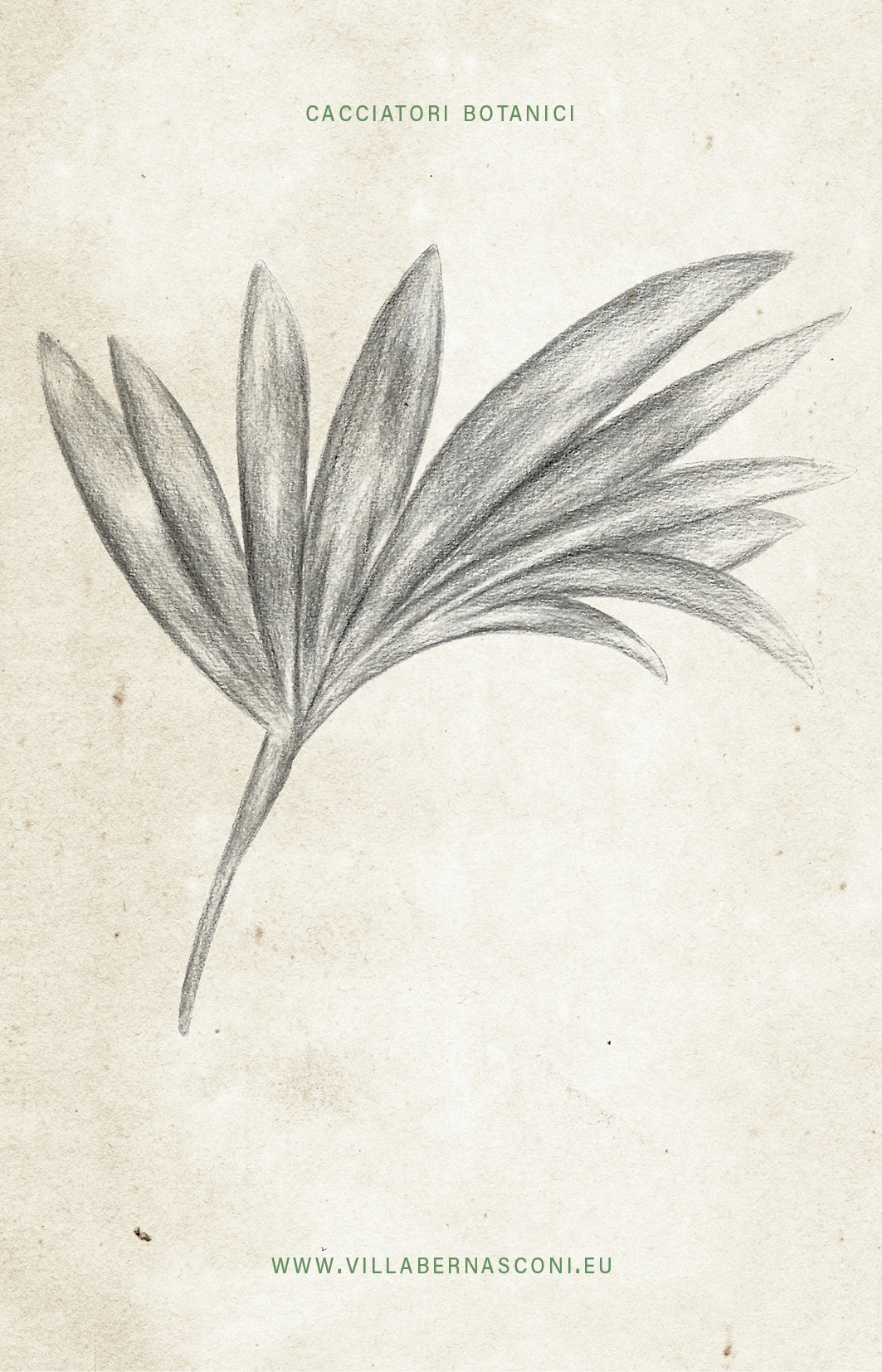
Find the corresponding decoration and take a photo of it
Windmill Palm
Trachycarpus fortunei
The palm is a plant that evokes something exotic, yet we have been accustomed to seeing it in our country for many years, since 1844, when the botanist Robert Fortune brought it to Europe.
Its leaves are highly decorative, evergreen, and fan-shaped; botanists describe them as “palmate” because they resemble the stylized shape of the palm of a hand. While palms have long been a familiar feature in our parks and gardens, more recently other tropical and exotic plants have entered our daily lives, giving rise to a real trend: creating a “home jungle.”
INSIGHT
If people do not go to the jungle, the jungle comes to them. This is a trend that has emerged in recent years, especially among younger generations living in small apartments in large cities. Whether to reconnect with nature or simply to make their living spaces more distinctive, many people fill their homes with indoor plants featuring large decorative leaves.
One of the most popular choices, perhaps because of its uniquely shaped leaves, is Monstera deliciosa, which instantly evokes a lush tropical jungle that no longer feels so far away. If the focus is instead on colors and leaf patterns, Calathea is especially striking: its leaves are often called “cathedral windows” or the “peacock plant,” giving a sense of their extraordinary decorative beauty, there is truly something for every taste.
For a real surprise effect, however, nothing compares to Strelitzia: in addition to its bold foliage, it produces a flower that looks almost magical, resembling the head of a bird, complete with beak and crest.
It is well known that plants improve indoor air quality, but caring for them also creates an emotional connection that can help reduce stress. It is no coincidence that during the coronavirus lockdown, the plant market grew significantly. And when your home walls start to feel too small, remember: there is always room for a colorful indoor jungle!